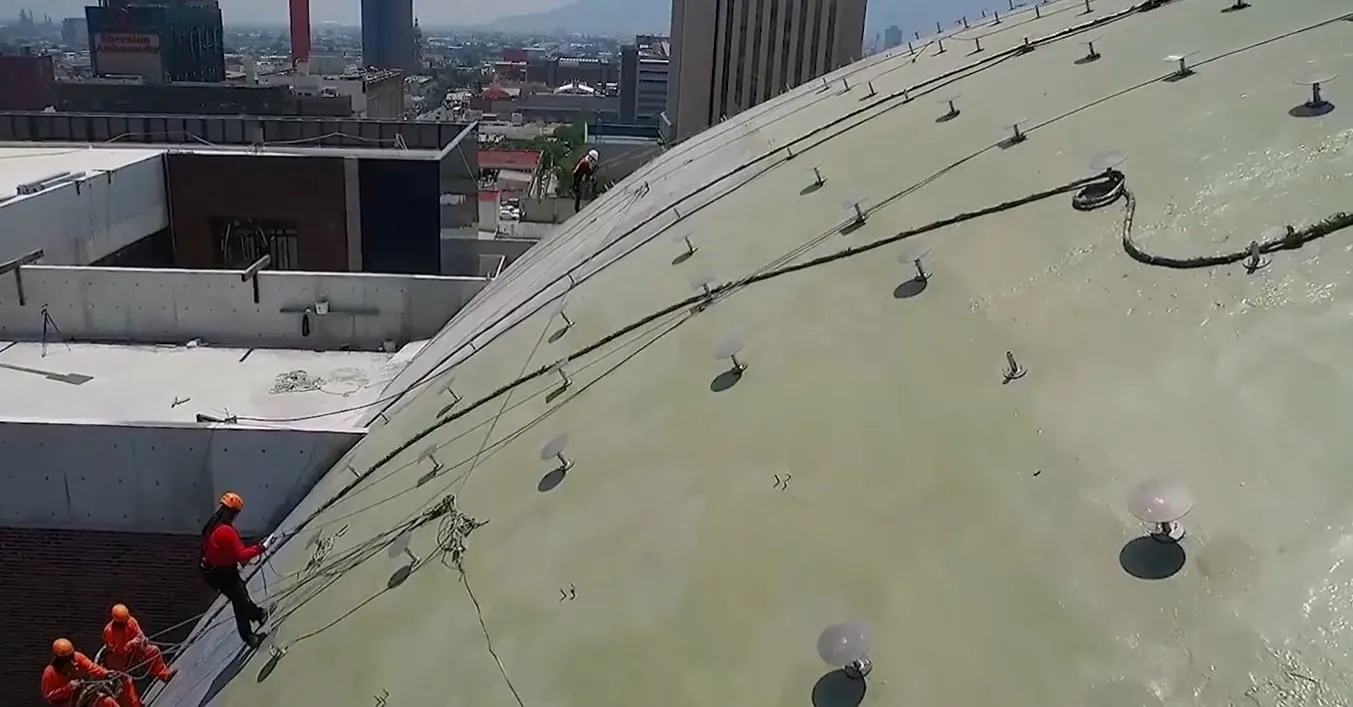
Polyurea roof coating for flat roofs is a spray-applied, seamless membrane system that dries in minutes instead of hours, and for contractors still working with bitumen, EPDM, or standard liquid coatings, that difference alone can reshape a job schedule. Faster dry times mean fewer weather-dependent delays, fewer return trips, and a membrane with no seams for callbacks to start at.
This guide compares polyurea against the systems many contractors currently apply, walks through what the process actually looks like on a roof, and covers what to know before adding it to your service offering.
Why Contractors Are Looking at Polyurea
Most flat roof failures — and most callbacks — trace back to the same weak point: seams. Bitumen and built-up systems rely on overlapping sheets and joints, and every one of those joints is a potential leak path once the building starts expanding and contracting with the seasons. Bitumen also tends to absorb heat, which accelerates its own breakdown over time and adds to the thermal load on the structure below.
Polyurea skips that problem structurally. Because it's sprayed on as a liquid and dries into one continuous membrane, there are no seams to seal, tape, or eventually re-seal. For a crew, that also means less time cutting and fitting material around drains, flashing, and penetrations — the coating follows the roof's actual contours.
How Polyurea Compares to What You're Likely Using Now
| Factor | Polyurea Coating | Bitumen / Built-Up | Standard Liquid Coatings |
|---|---|---|---|
| Dry time | Minutes | Hours to days (multi-layer) | Hours to over a day |
| Seams | None — monolithic membrane | Multiple seams and joints | Depends on system |
| Weather exposure during cure | Minimal window | Extended, multi-day exposure risk | Longer exposure window |
| Flexibility | High elongation, resists cracking | Becomes brittle over time | Varies by product |
| Callback risk | Lower — no seam failure points | Higher — seams are common failure points | Moderate |
| Labor time on roof | Typically faster, single-pass application | Longer, multi-step layering | Longer cure windows extend project time |
Fast dry isn't just a spec sheet number — it's the difference between finishing a roof in a single work window and having a crew exposed to a weather risk overnight.
What the Application Process Looks Like
The process is straightforward, but each step matters for how the finished membrane performs and how few problems come back to you later:
- Surface preparation. Deteriorated material — old bitumen, failing coatings — is removed, and the substrate is cleaned so the primer can properly bond. This step is where most long-term failures actually originate, regardless of which topcoat gets used.
- Priming. A primer such as Ultimate Linings' P616, often combined with quartz sand for mechanical grip, is applied to promote adhesion between the deck and the coating above it.
- Coating application. A high-performance polyurea topcoat, such as Ultimate Linings' XP-421, is sprayed on to fully seal the roof in a seamless, watertight membrane. Because it dries fast, there's a much narrower window where an unexpected weather change can compromise the job.
- UV-stable topcoat. A finishing topcoat protects the membrane from ultraviolet degradation — an important step since UV exposure is one of the main long-term stressors on any exposed roof surface, polyurea included.
What Elongation Means for Your Callback Rate
Elongation measures how much a cured membrane can stretch before it tears, and it's one of the more useful specs for predicting long-term performance. Ultimate Linings' XP-421, for example, offers 160% elongation, which lets the membrane flex with a building's natural expansion and contraction instead of cracking at stress points the way rigid or aged bitumen does. For a contractor, that translates directly into fewer warranty calls tied to seasonal cracking.
Is Polyurea Worth Adding to Your Service Offering?
Polyurea tends to be worth evaluating if your crew is currently dealing with:
- Frequent callbacks tied to seam failures on bitumen or built-up roofs
- Tight project windows where multi-day dry times cause scheduling problems
- Customer requests for a longer-lasting, more flexible waterproofing option
- A desire to differentiate from competitors still quoting older systems
It's a bigger shift for crews with no spray-application experience, since equipment and technique differ from roll-applied or torch-applied systems — which is exactly where manufacturer technical support matters most during the transition.
Questions to Ask Before You Switch Systems
- What training or on-site technical support does the manufacturer provide during your first few jobs?
- What are the published specs (elongation, dry time, UV resistance) for the primer and topcoat you'd be using?
- What equipment investment is required to spray-apply the system?
- What warranty backs the finished membrane, and what's required to maintain it?
A manufacturer that can answer these clearly — and back it with real technical support — is usually a good sign of how the relationship will work long-term. Ultimate Linings' Contractor Partnership program is built around exactly that kind of manufacturer-direct support.
Frequently Asked Questions
Do I need special equipment to apply polyurea coatings?
Spray-applied polyurea generally requires proportioning and spray equipment different from roll-applied or torch-applied systems. Manufacturers that supply the product typically also provide technical guidance on equipment and application technique for contractors making the switch.
How does polyurea compare to bitumen on cost per job?
Material cost per job varies by project and region, but faster dry times and fewer callbacks can offset a higher material cost through reduced labor days and warranty exposure. A contractor should compare total project economics, not just per-gallon pricing.
Can polyurea be applied over an existing bitumen roof?
In many cases, yes, once deteriorated material is removed and the substrate is properly prepped and primed. Surface condition should be assessed on a per-job basis.
Does polyurea require a separate UV-protective topcoat?
Yes, in most systems. The base polyurea layer provides the waterproof seal, while a UV-stable topcoat protects the membrane from long-term sun exposure.
Thinking of Adding Polyurea to Your Offering?
Ultimate Linings manufactures the P616 primer and XP-421 polyurea coating system and provides technical support to contractors applying it — from spec questions to on-the-job guidance. If you're weighing polyurea against what you're currently spraying, contact us to talk through the system, or call (800) 989-9869 to speak with technical support directly.